The planning journal
The Ceremony-Outfit Rehearsal: Practise the Movements, Not Just the Mirror Pose
Plan a practical fitting rehearsal around the movements, accessories and transitions your ceremony actually includes.
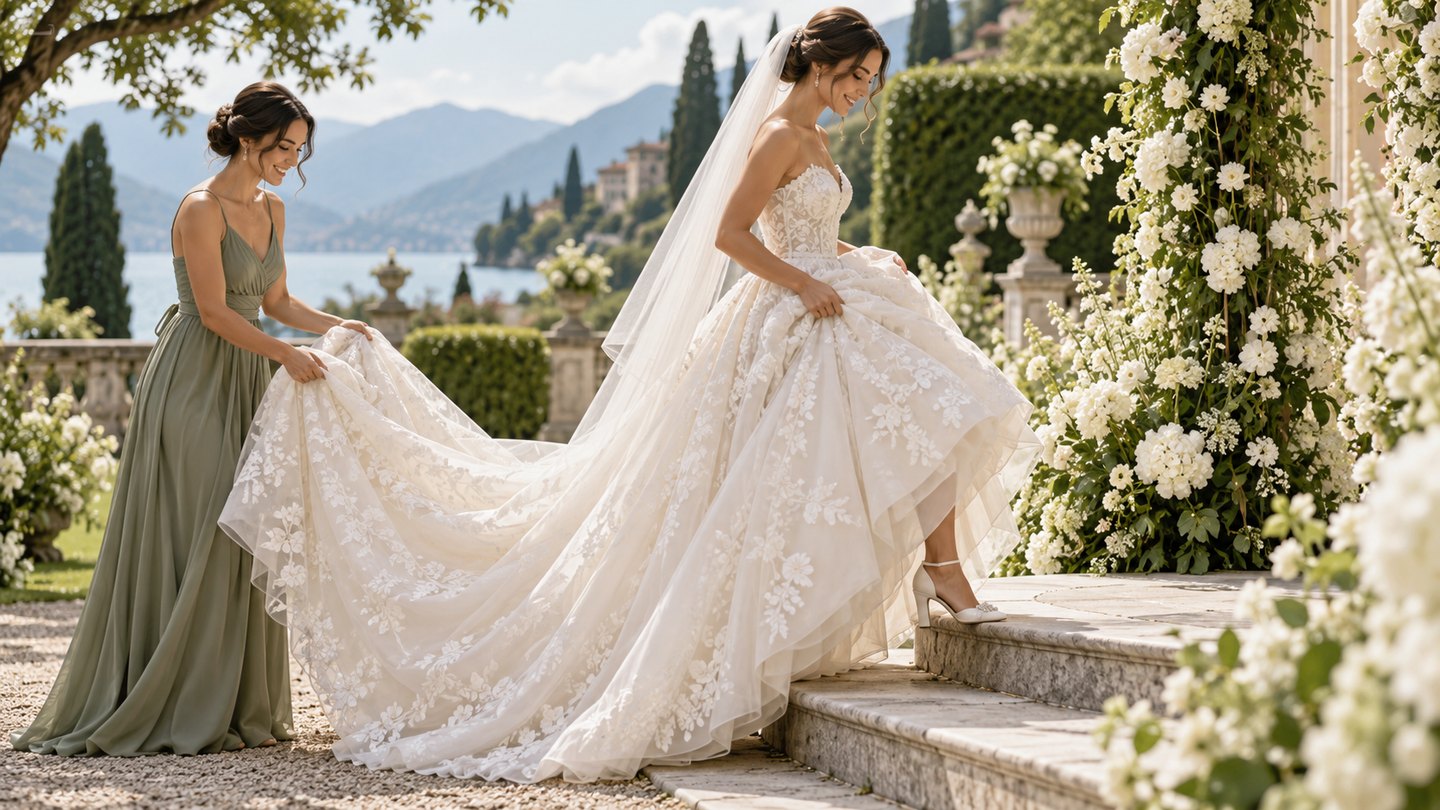
An outfit can look settled in a boutique mirror and feel quite different when you sit, climb a step or turn to greet someone. A short movement rehearsal gives those ordinary moments some attention before the wedding morning. It is not a test of whether you can tolerate discomfort. Its purpose is to find questions while there is still time to ask the person fitting your clothes.
Rehearse your actual ceremony
Write down the movements your plans really involve. You might walk over paving, travel in a car, sit through readings, stand for vows or move between rooms. Some ceremonies involve kneeling, circling or other specific actions; only include those that belong to your own ceremony. Ask your celebrant or ceremony lead when you are unsure rather than assuming that an online timeline describes your tradition.
Take the relevant list to a fitting. Ask what can be tested safely in the space and what should wait until the outfit is ready. You do not need to recreate a venue obstacle or risk damaging a garment to learn that a hem or fastening needs discussion.
Bring the items that change the fit
Use the shoes and agreed underlayers intended for the day when the fitter asks you to bring them. If you have changed either since measurements were taken, say so. Explain any practical need that affects fit or access, including wearing a medical device, using a mobility aid or needing help with fastenings. Share only what is necessary and comfortable for you; the aim is an outfit that works for the person wearing it.
An accessory can also change how you move. A veil, cape, jewellery piece or head covering may need its own fitting conversation. Ask the relevant professional how it is secured and who can adjust it. Avoid improvising pins, adhesives or extra supports without checking that they suit the material and the wearer.
Try a small sequence slowly
With permission, walk several ordinary steps, turn, sit and stand. Reach as you would to hold hands, greet a guest or carry a small item. Explain any pulling, slipping or restriction instead of compensating with an unusual posture. Tell the fitter where it happens and during which movement. A clear description is more useful than simply saying the outfit feels wrong.
If a bustle or removable layer is part of the plan, ask for a demonstration. Invite the person who will actually help on the day, if appropriate, and ask whether they may record instructions for private reference. Check that they understand the attachment points. Do not assume a photograph of the finished result shows the sequence needed to achieve it.
Make the transition plan visible
Many outfit difficulties appear between the formal moments: getting into transport, using a bathroom, taking off a layer or changing for the reception. Decide where there will be privacy, who is available to help and where removed pieces will be kept. Nobody needs to carry an unnamed bag all afternoon because the storage plan ended at the ceremony.
If you are changing outfits, put the required items together and label the bag by its destination. A trusted helper needs a place and a time, not access to every part of your personal schedule. Keep a comfortable backup option available when that is useful, without treating it as a promise that every fitting issue can be fixed on the day.
Finish with a short action record
Before leaving the fitting, confirm what is changing, when you next return and which accessories must come with you. Record unresolved questions separately from approved alterations. At the final collection, repeat the important movements if the fitter agrees, then ask for the garment's own care instructions.
For a bridal business, this rehearsal is an opportunity to explain the service clearly. Showing a client how an outfit works is part of helping them make a considered choice. It does not require promising a flawless wedding; it requires listening to the movements their real day contains.
Original Brides.ltd practical planning commentary. Not medical, tailoring or accessibility advice for a specific person; ask the appropriate professional about individual needs.